Treatments
Acupuncture for muscle pain: what does the evidence actually say?
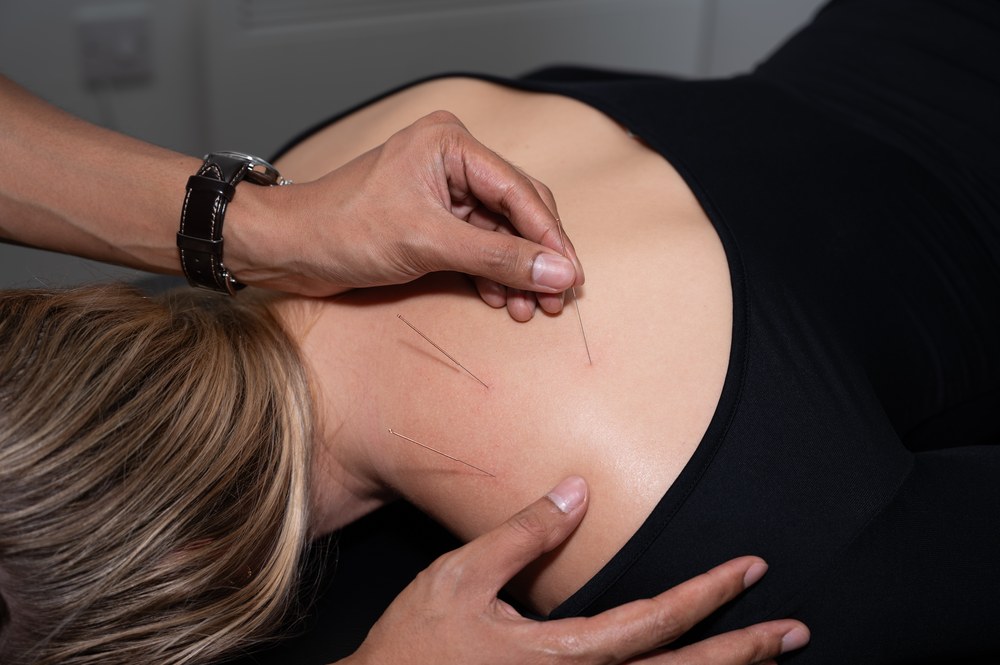
Acupuncture gets asked about a lot, usually with some scepticism attached, which is fair. It's worth being upfront: the version used in physiotherapy clinics in the UK, sometimes called Western medical acupuncture or dry needling, isn't based on traditional Chinese medicine concepts like meridians or energy flow. It's a needling technique used within a physiotherapy assessment, alongside manual therapy and exercise, not instead of them.
What the research actually shows
The evidence for acupuncture in musculoskeletal pain is genuinely mixed, and it's worth saying that plainly rather than overselling it. For conditions like chronic low back pain, neck pain, and myofascial trigger points, several trials and reviews have found modest short-term reductions in pain when acupuncture is added to standard care, though the effect size is generally small and it's often difficult to separate from a strong placebo response in needling studies. It tends to perform less consistently for pain that's already well-managed through exercise and manual therapy alone.
How it's thought to work
The leading explanations are physiological rather than mystical: needling can trigger a local twitch response in a tight muscle band, temporarily increase local blood flow, and stimulate the nervous system's own pain-modulating pathways, similar to a gate-control effect. None of this requires any concept of energy channels, which is why it fits within an evidence-based physiotherapy framework at all.
Where it fits into treatment
In clinic, acupuncture is used selectively, most often for a stubborn, well-localised area of muscle tightness or a trigger point that isn't responding well to manual therapy alone, and typically for a short period to help create a window where exercise and movement become more comfortable. It's not used as a default addition to every session, and it's never used as a stand-alone treatment for a problem that needs a loading or movement-based fix instead.
The honest summary
Acupuncture is a reasonable, low-risk option to try alongside standard physiotherapy for certain types of muscular pain, particularly stubborn trigger points. It isn't a guaranteed fix, it isn't right for everyone, and it works best as one part of a broader plan rather than the plan itself.