Treatments
Sports massage and cupping: what they do and when they help
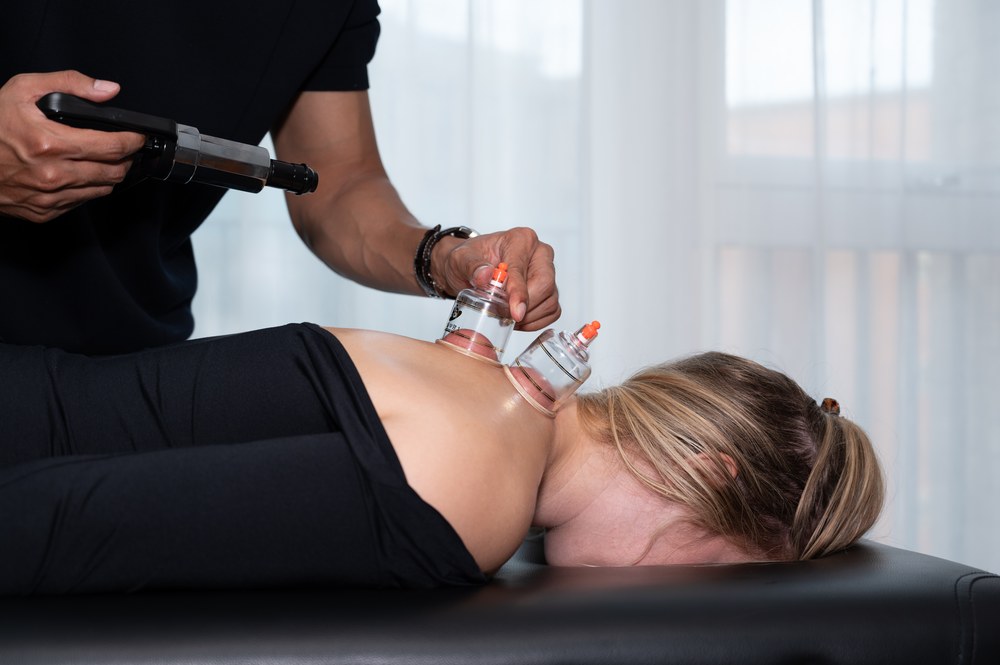
Sports massage and cupping are two of the most requested treatments in clinic, and also two of the most misunderstood. Neither is a stand-alone fix for an underlying problem, but used at the right time, both can genuinely speed up how you feel and move.
Sports massage: what it actually does
Sports massage uses targeted, often firmer pressure through specific muscle groups to reduce tightness, improve local blood flow, and temporarily reduce muscle guarding around an area. It's particularly useful for muscles that are chronically overworked, think calves in runners, or upper traps and lats in people who lift heavy, where tightness builds up faster than it resolves on its own.
It won't correct a structural imbalance or fix a movement pattern on its own, but it's an effective way to reduce the background tightness that makes your rehab exercises harder to do properly.
Cupping: what it actually does
Cupping uses suction to lift the skin and underlying fascia away from the muscle, which can help improve local circulation and reduce the sensation of tightness, particularly through the back and shoulders. Some patients find it more effective than massage for stubborn areas that don't respond well to direct pressure. It commonly leaves temporary circular marks, which fade within a few days and aren't bruising in the traditional sense.
Where they fit alongside physiotherapy
Both treatments work best as a complement to hands-on joint and soft-tissue work and a structured exercise plan, not as a replacement for it. In clinic, they're used selectively: if tightness is genuinely limiting your ability to move well or complete your rehab exercises properly, easing that tightness with massage or cupping makes the rest of the session more effective. Used on their own, session after session, without addressing the underlying cause of the tightness, the relief tends to be short-lived.
Who tends to benefit most
- Runners and gym-goers with recurring tightness in the same one or two areas
- Anyone whose muscle tightness is limiting their exercise technique during rehab
- Desk-based professionals with chronic upper back and neck tension